


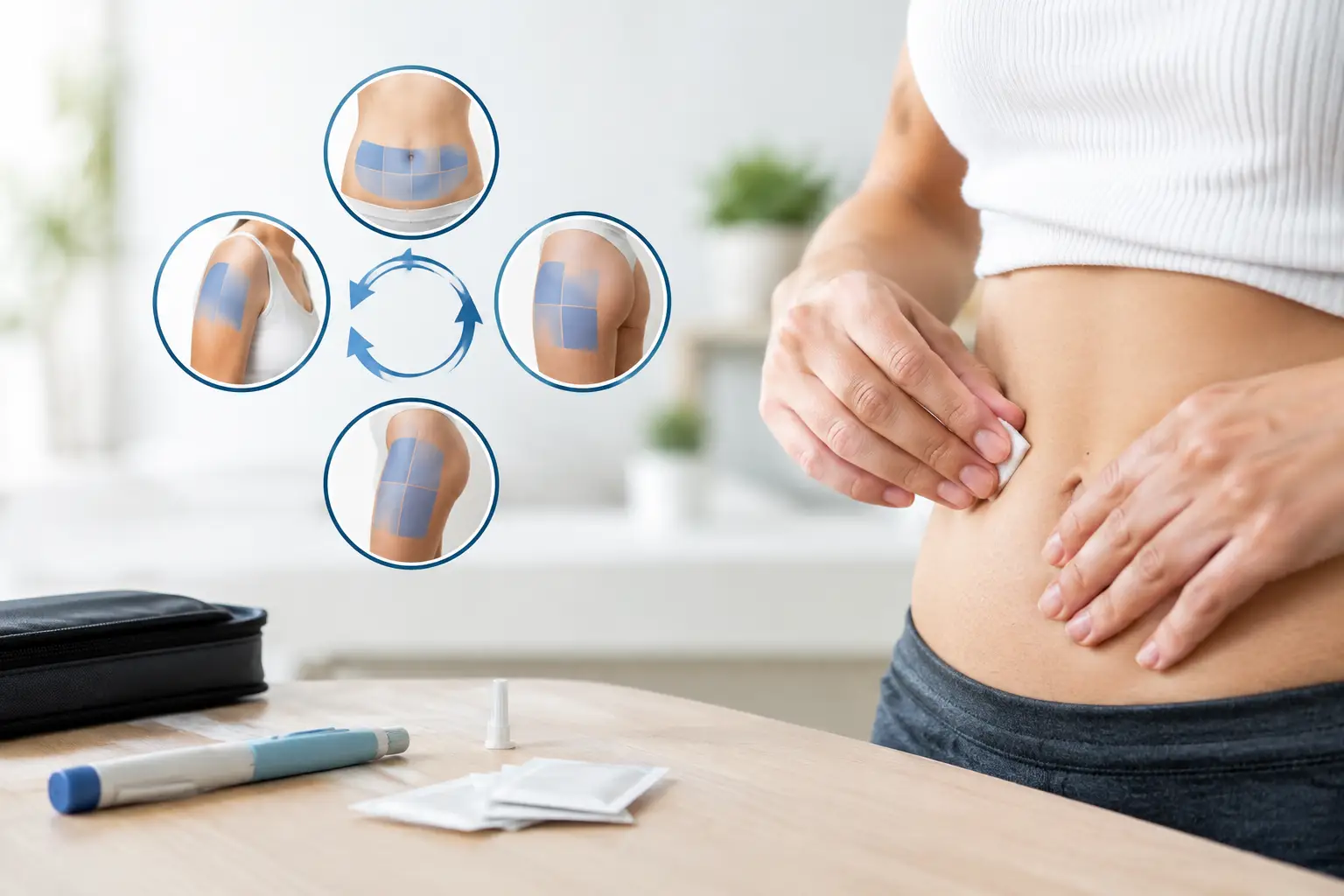
A weekly injection can become part of a successful health routine, but using the same spot repeatedly can make that routine less comfortable. This guide to injection site rotation explains how to rotate safely, protect your skin, and make prescribed injectable treatment easier to maintain over time.
For patients using GLP-1 medications such as semaglutide or tirzepatide, or receiving other injectable wellness therapies, small practical details matter. A thoughtful rotation plan supports comfort, helps you notice skin changes early, and gives you one less decision to make on a busy day.
Why Injection Site Rotation Matters
Injection site rotation means using a different approved area of the body for each dose rather than injecting into the exact same point every time. It does not mean choosing a random location. Your medication’s instructions and your clinician’s guidance determine which body areas are appropriate.
Repeated injections in one small area can irritate the skin and underlying tissue. Over time, some people develop tenderness, bruising, firm areas, or lumps. Injections placed into irritated or damaged tissue may also feel more uncomfortable. With certain injectable medications, changes in fatty tissue may affect how reliably the medicine is absorbed.
Rotation is therefore a simple form of preventive care. It helps you treat your body with the same consistency you bring to your nutrition plan, movement goals, hydration, and follow-up visits.
Start With the Right Sites for Your Medication
Most self-administered GLP-1 medications are given as subcutaneous injections, meaning the medication is delivered into the fatty layer just under the skin. Common approved locations often include the abdomen, front of the thigh, and, for some products, the back of the upper arm. Always follow the prescribing information for your specific medication and the directions provided by your medical team.
The abdomen is a preferred option for many patients because it is easy to see and reach. Avoid injecting too close to the navel. A practical rule is to stay at least two inches away from your belly button and to select a soft, intact area of skin.
The front or outer thigh can also work well. Choose an area between the hip and knee where there is enough fatty tissue, rather than injecting very close to the knee or inner thigh. The back of the upper arm may be approved for some medications, but it can be difficult to reach safely on your own. A trained caregiver may be able to assist if that site is appropriate for your prescription.
Do not assume that sites appropriate for a GLP-1 injection are appropriate for every injection. Some B12, lipotropic, or other wellness injections may be administered differently, including intramuscularly. The correct location, needle, angle, and technique depend on the medication and route. If you are unsure, pause and ask your clinician before injecting.
Areas to Avoid
Skip any area that is painful, bruised, swollen, hard, scarred, sunburned, or visibly irritated. Avoid rashes, open skin, stretch marks when possible, and places where clothing or a waistband repeatedly rubs. If you have had surgery, have scar tissue, or use a medical device, ask your clinician how to select safe injection areas around those concerns.
A small amount of temporary redness can occur after an injection. However, increasing redness, warmth, severe pain, drainage, a spreading rash, or swelling that does not improve deserves medical attention. Contact your prescribing provider promptly if you have concerns about a reaction.
A Simple Guide to Injection Site Rotation
The most effective rotation system is the one you can remember. You do not need a complicated chart, but you do need enough structure to avoid returning to the same point each week.
Many patients find it helpful to divide the abdomen into sections, such as upper right, lower right, upper left, and lower left. Each week, move to the next section. Within that section, choose a point at least one inch away from the location used previously. This creates space for the prior site to recover.
If you prefer to rotate between body regions, you might use the abdomen one week and a thigh the next. Some people find one area more comfortable than another, and that is reasonable. The goal is not to use every possible site equally. The goal is to avoid repeatedly injecting into the same exact place.
A paper calendar, phone reminder, or brief note in your health journal can help. Record the date, medication, dose, and general site, such as “left abdomen” or “right thigh.” This is especially useful when your dose changes or when more than one person assists with injections.
Keep Your Routine Consistent
Choose a time and setting where you are less likely to rush. Gather your medication and supplies, verify the medication name and dose, and wash your hands. Check the medication according to the storage and appearance instructions you were given. If it looks unusual, has been stored improperly, or is expired, do not use it until you have spoken with your pharmacy or medical team.
Clean the selected site as directed and allow it to dry fully before injection. Injecting through wet alcohol can sting. Use a new needle or device as instructed, and never share injection supplies. Place used needles or pens in an appropriate sharps container, not in loose household trash.
Follow the exact instructions for your product. Some auto-injectors must be held in place for a specific number of seconds. Others have visual or audible indicators that confirm the dose was delivered. Do not change the dose, needle length, or injection technique based on online advice or another patient’s experience.
What If One Site Feels Different?
A little tenderness or a pinpoint drop of blood can happen occasionally. Applying gentle pressure with clean gauze or a tissue is usually enough. Avoid rubbing or massaging the area unless your clinician specifically tells you otherwise.
If an abdomen site feels sore, it may be sensible to use an approved thigh site for the next dose. If every approved site is becoming painful, bruised, or difficult to use, that is a reason to contact your provider rather than simply pushing through. Your technique, supplies, medication storage, injection depth, or rotation pattern may need review.
Absorption can vary somewhat from person to person, but patients should not adjust their prescribed dose because they believe one site “works better.” Consistency with your approved injection technique is more useful than chasing a particular sensation or side effect.
Special Considerations for Weight Management Medications
GLP-1-based weight management is most effective when it is part of an individualized care plan, not a weekly task completed in isolation. Injection site rotation helps support treatment adherence, but it does not replace guidance on nutrition, protein intake, activity, sleep, side-effect management, and follow-up monitoring.
If nausea, constipation, reduced appetite, or other side effects are affecting your ability to eat, drink, or stay active, discuss this with your clinician. Do not skip, double, or alter doses without medical direction. Your provider can help determine whether changes in timing, dose progression, nutrition habits, or supportive care are appropriate.
At Medical Excellence Wellness and Healthcare, patients are encouraged to bring practical questions like these to their appointments. The right plan should fit your medical history, current medications, health goals, and daily routine, while keeping safety at the center of care.
Make Rotation a Form of Self-Care
Site rotation is not about being perfect. It is about creating a repeatable habit that respects your body and supports long-term treatment. Choose approved sites, keep a simple record, give each area time to recover, and ask for help when something does not feel right.
Each well-planned dose is a small, steady action in support of your broader health goals.