


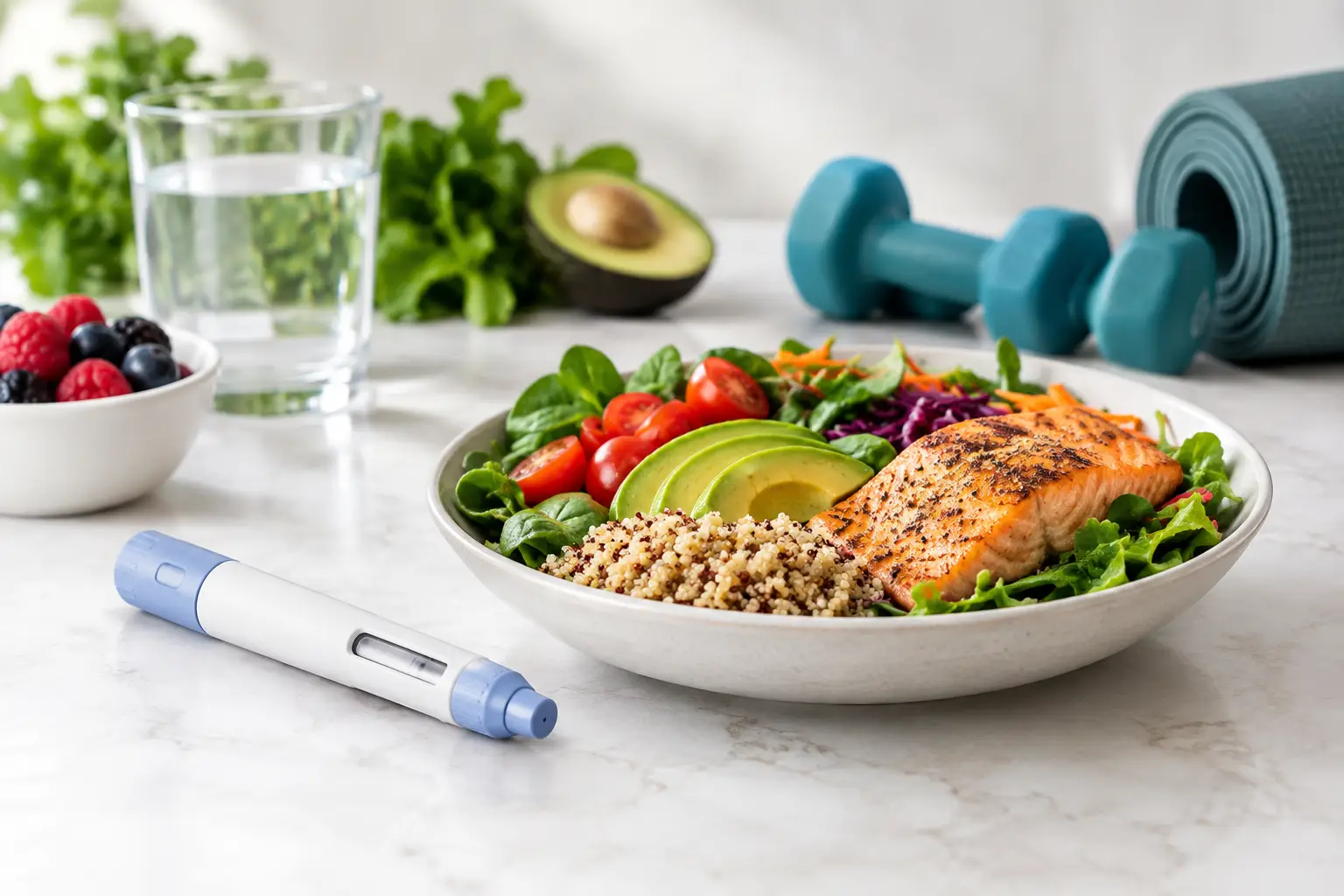
A smaller appetite can feel like a welcome change when weight loss has been difficult. But when medications such as Wegovy (semaglutide) or Mounjaro (tirzepatide) reduce hunger, eating too little or relying on whatever feels easiest can leave you tired, dehydrated, constipated, or short on key nutrients. This GLP-1 nutrition guide is designed to help you make each meal count while supporting safe, sustainable progress under medical supervision.
GLP-1 medications can be highly effective tools for treating obesity as a chronic metabolic condition. They are not a substitute for nutrition, strength-building movement, hydration, or ongoing clinical follow-up. The goal is not to eat as little as possible. The goal is to build an eating pattern that supports your health at a lower calorie intake without making you feel deprived or unwell.
How GLP-1 Medications Change Your Eating Experience
GLP-1-based medications help regulate appetite and blood sugar signaling. They also slow stomach emptying, which means food may stay in the stomach longer. Many patients feel full after a smaller portion, have less interest in snacking, or notice that heavy meals no longer sit well.
That shift is useful, but it changes the strategy. A large restaurant-style plate may be uncomfortable, while skipping meals all day can make it hard to meet protein, fluid, fiber, and vitamin needs. Some people do best with three small meals. Others prefer two modest meals and a planned protein-rich snack. Your best routine depends on your medication dose, symptoms, activity level, health conditions, and personal preferences.
If appetite suppression becomes so strong that you cannot consistently eat or drink, contact your prescribing clinician. Persistent vomiting, severe abdominal pain, signs of dehydration, or inability to keep fluids down should never be managed by simply trying to push through.
GLP-1 Nutrition Guide: Put Protein First
Protein deserves priority during medical weight loss. When the body loses weight, it can lose lean muscle tissue along with fat. Adequate protein, paired with appropriate resistance exercise, helps protect muscle that supports strength, mobility, metabolism, and independence as you lose weight.
Start meals with the protein source, especially when you are only able to eat a small amount. Options may include eggs, Greek yogurt, cottage cheese, chicken, turkey, fish, lean beef, tofu, tempeh, beans, lentils, or a protein shake when solid food is not appealing. The right amount is individual. Your clinician can help establish a realistic daily target based on your body size, kidney health, activity level, and medical history.
A practical meal might be grilled chicken with a small serving of roasted vegetables. Breakfast could be Greek yogurt with berries, or eggs with spinach and a slice of whole-grain toast. If nausea makes a full meal difficult, a chilled protein shake, yogurt, soup with added protein, or a small portion of cottage cheese may be easier to tolerate.
Protein is not only for people who exercise heavily. It is a foundation for preserving health while the scale changes.
Build Small Meals That Still Deliver Nutrition
Once protein is in place, add foods that provide fiber, vitamins, minerals, and steady energy. Think of a small plate rather than a restrictive plate. Colorful vegetables, fruit, beans, whole grains, nuts, seeds, and healthy fats each have a role, but portions may need to be smaller than they were before treatment.
Fiber can support bowel regularity, fullness, cholesterol management, and blood sugar control. However, increasing fiber too quickly when your stomach is already adjusting can worsen bloating or discomfort. Introduce it gradually and increase fluids at the same time. Cooked vegetables, berries, oatmeal, beans, lentils, chia seeds, and high-fiber whole grains are often practical choices.
Carbohydrates do not need to disappear. The more useful question is which carbohydrates help you feel nourished and satisfied. Oatmeal, fruit, brown rice, sweet potatoes, beans, and whole-grain bread offer more nutrition than sugary drinks, pastries, or highly processed snack foods. If you live with diabetes or use insulin or certain diabetes medications, carbohydrate planning should be personalized with your medical provider.
Healthy fats can make small meals more satisfying, but rich or greasy foods can worsen nausea for some patients. A small amount of avocado, olive oil, nuts, seeds, or nut butter may be better tolerated than fried foods, creamy sauces, or large high-fat meals.
Hydration Is Part of Your Treatment Plan
Many people unintentionally drink less after starting a GLP-1 medication. You may feel less thirsty, become full quickly when drinking, or find plain water unappealing when nauseated. Yet hydration supports energy, bowel function, kidney health, and recovery from exercise.
Sip fluids throughout the day instead of trying to catch up with a large bottle at night. Keep water nearby during work, errands, and travel. Unsweetened tea, flavored water without added sugar, broth, and electrolyte beverages can be useful in certain situations, particularly if you have had vomiting or diarrhea. Ask your clinician which options fit your needs if you have high blood pressure, kidney disease, heart failure, or diabetes.
A simple sign that your routine may need attention is dark urine, dizziness, headaches, dry mouth, or constipation. These symptoms can have several causes, but they are worth discussing with your care team rather than ignoring.
Eating to Reduce Nausea and Digestive Side Effects
Nausea, constipation, reflux, bloating, and occasional vomiting are common reasons people struggle with GLP-1 nutrition. The answer is not the same for everyone, but meal size and pace matter. Eat slowly, stop when comfortably full, and avoid lying down right after eating.
Many patients tolerate smaller, lower-fat meals better than a large meal with fried foods, alcohol, or heavy sauces. Bland choices such as crackers, toast, rice, bananas, soup, applesauce, or yogurt may help during a short period of nausea, but do not let these become your only foods for weeks. Return to protein and produce as symptoms improve.
Constipation often responds to a combination of fluids, gradual fiber intake, regular movement, and a consistent eating schedule. Some people need medication adjustments or additional treatment. Discuss persistent constipation with your clinician, especially if it comes with significant pain, vomiting, or an inability to pass stool or gas.
It is also reasonable to plan around injection day. If you tend to feel more nausea afterward, choose simple protein-forward foods, avoid an oversized meal the night before, and make hydration easier to manage. Your prescribing provider may have additional recommendations based on your specific medication and dose.
Protect Muscle With Food and Strength Training
The number on the scale is only one measure of progress. Maintaining muscle while reducing excess body fat can improve body composition and help support long-term weight maintenance. Walking is valuable for cardiovascular health, but resistance training is especially helpful for muscle preservation.
That can mean body-weight movements, resistance bands, machines, dumbbells, or supervised exercise that fits your current ability. Even two or three sessions per week can be meaningful when performed consistently. If joint pain, sleep apnea, asthma, high blood pressure, or a prior injury affects exercise, ask for guidance before beginning a new program.
Nutrition and movement work together. A protein-rich meal or snack after strength training can be a practical way to support recovery, particularly if your appetite is limited later in the day.
Create a Routine You Can Keep After Weight Loss
The most effective plan is usually the one that feels realistic on a busy Maryland workday, not the one that looks perfect for a week. Keep a few easy meals at home, bring a protein option to work, and avoid waiting until you are overly hungry to decide what to eat. A simple routine reduces the chance that low appetite leads to skipped meals followed by takeout or grazing later.
There is no requirement to eat perfectly. A birthday dinner, holiday meal, or occasional dessert can fit into a medically guided weight-loss plan. The key is noticing how certain foods and portions make you feel on medication, then adjusting without guilt. Long-term health is built through repeatable choices, not punishment.
At Medical Excellence Wellness and Healthcare, nutrition guidance is part of a broader, individualized approach to weight management. Your medication, lab results, symptoms, lifestyle, and health goals should all inform your plan. With the right support, smaller portions can become an opportunity to nourish your body more intentionally and build habits that remain useful long after the initial weight loss phase.